
Overview
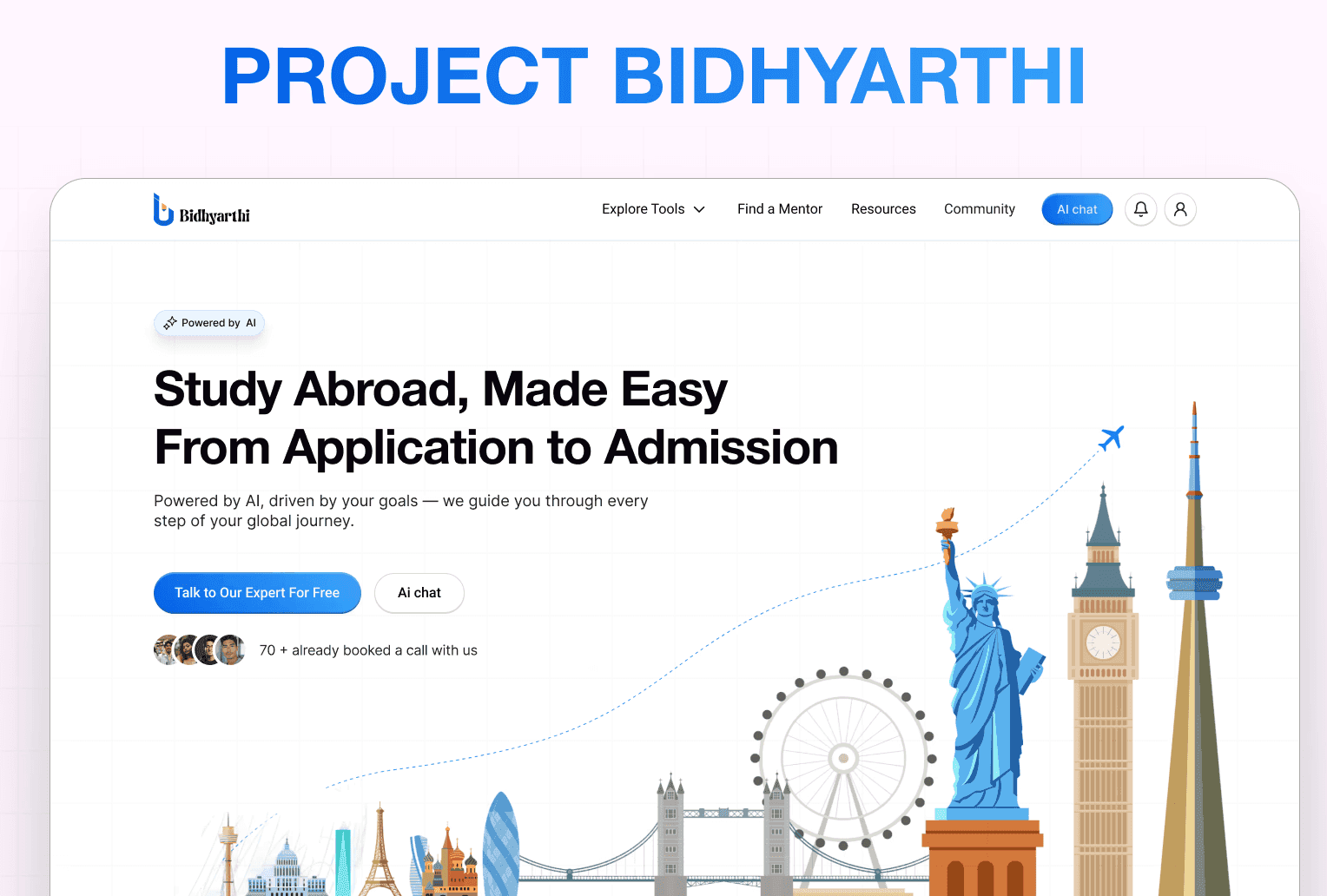
A study-abroad assistant needed a clearer path.
An AI-powered study abroad assistant redesigned end-to-end so students could understand options, ask better questions, and move toward application with more confidence.
The redesign reframed the assistant from a buried chat feature into a guided decision surface. Students could see what to ask, understand why a recommendation mattered, and move from curiosity to application without feeling pushed.
The work focused on trust before automation: clearer pathways, stronger information hierarchy, and interaction patterns that made AI feel useful without making the product feel loud.
Results
The product started doing more of the explaining.
3
Core journeys restructured
40%
Projected task-completion lift
1.2K+
Students in the intended guidance flow
Research
The trust problem showed up before the AI response.
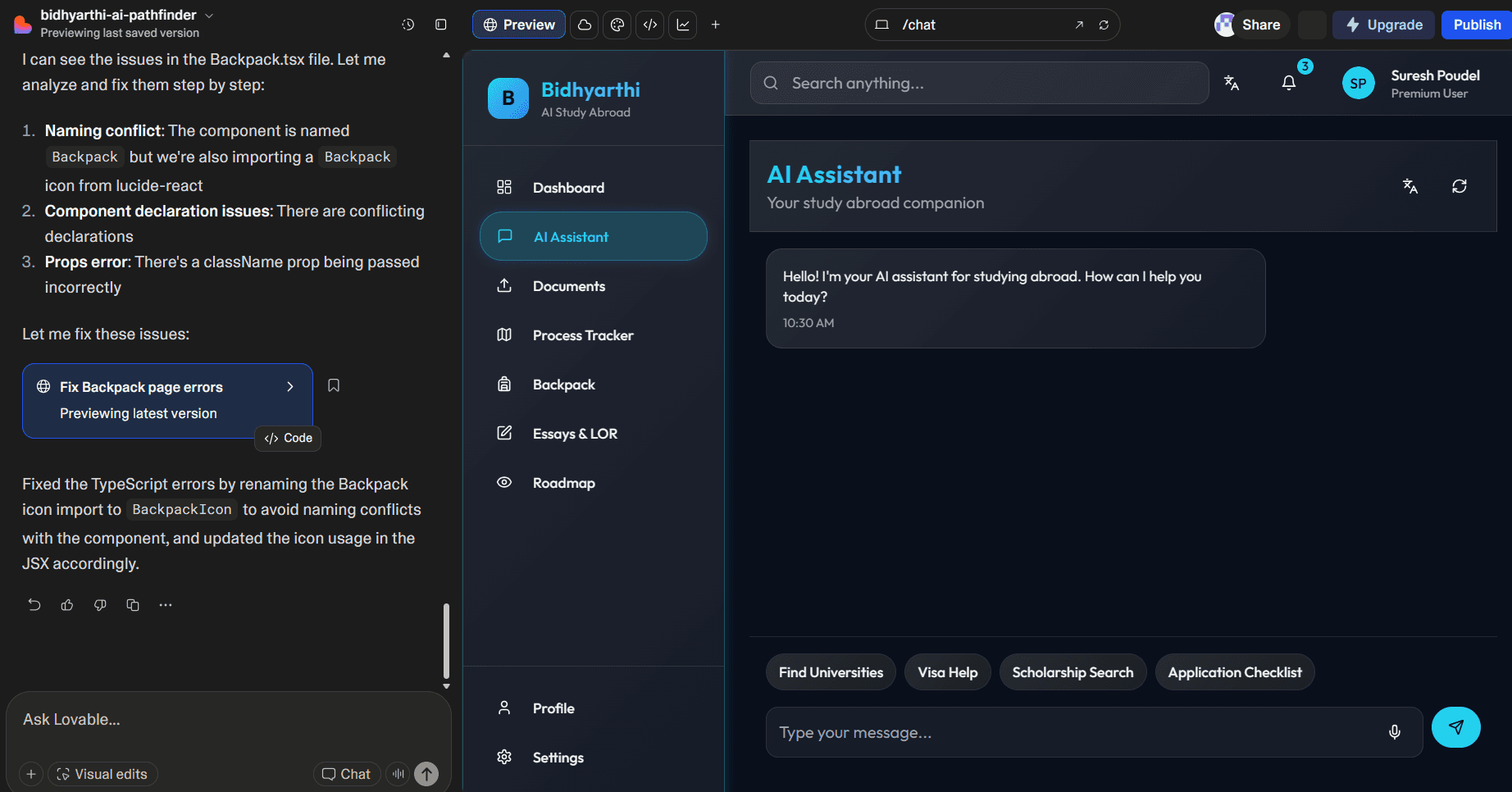
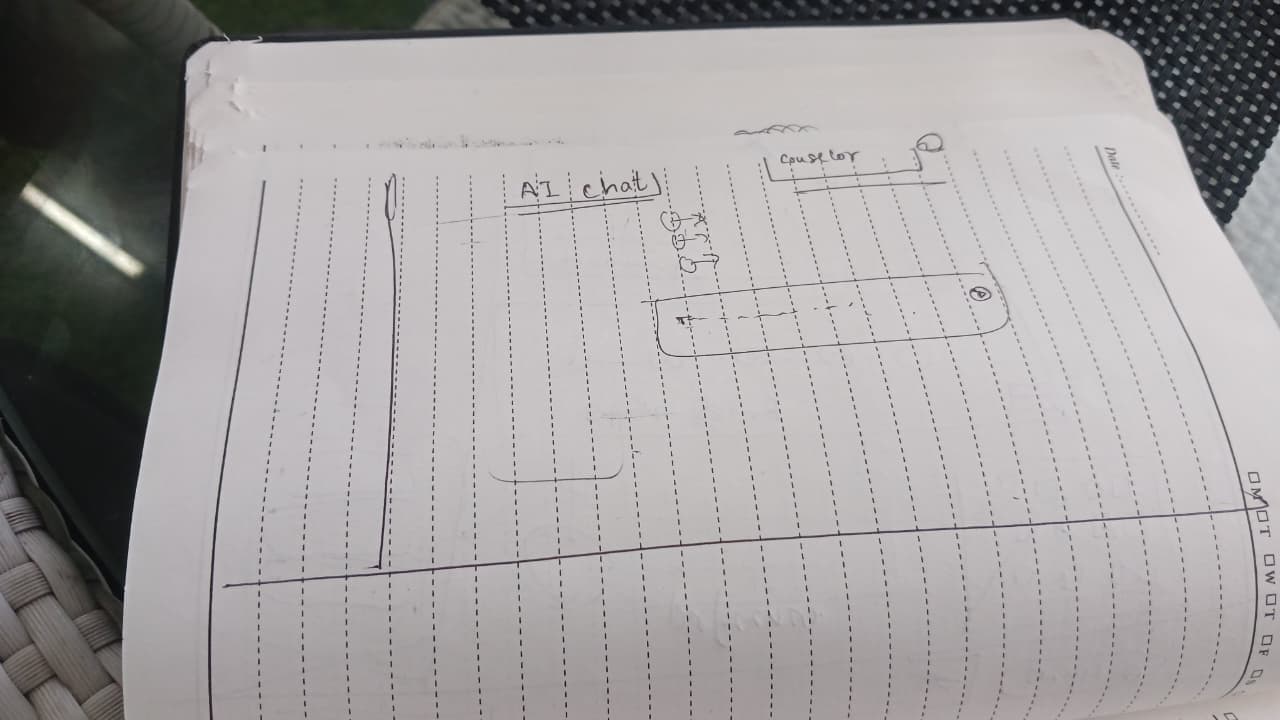
The AI feature was meant to generate qualified student leads, but it felt like a basic support chat. Students had little context, weak guidance, and no clear sense of what the system could do for them.
01
Mapped student intent from first curiosity through college comparison and application readiness.
02
Restructured the product around visible pathways, guided prompts, and calmer information hierarchy.
03
Turned the AI layer from a hidden chat utility into a platform behavior that supports decisions across the journey.
Design strategy
Make the guidance visible before asking for trust.
Mapped student intent from first curiosity through college comparison and application readiness.
Restructured the product around visible pathways, guided prompts, and calmer information hierarchy.
Turned the AI layer from a hidden chat utility into a platform behavior that supports decisions across the journey.
Selected screens
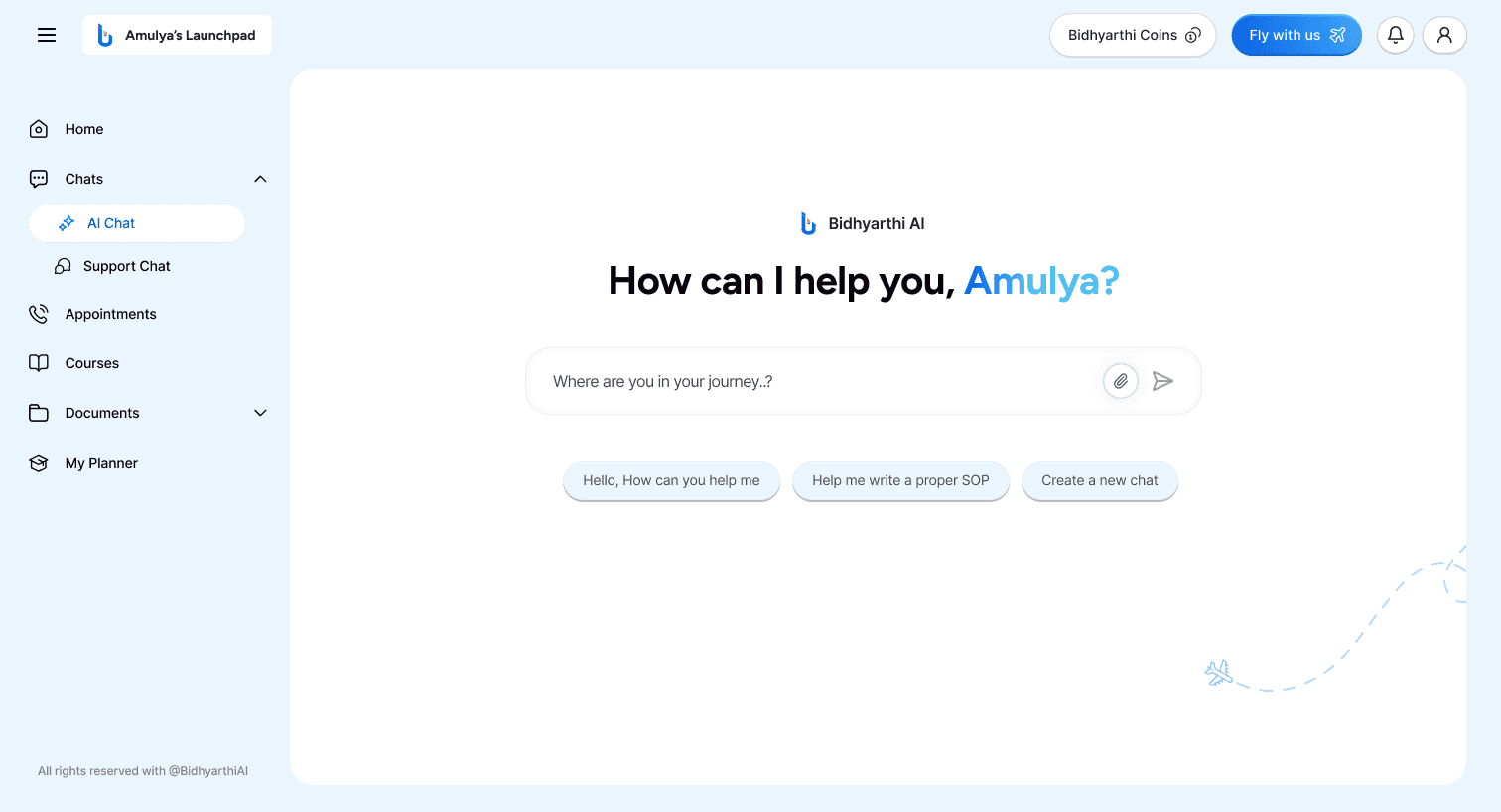
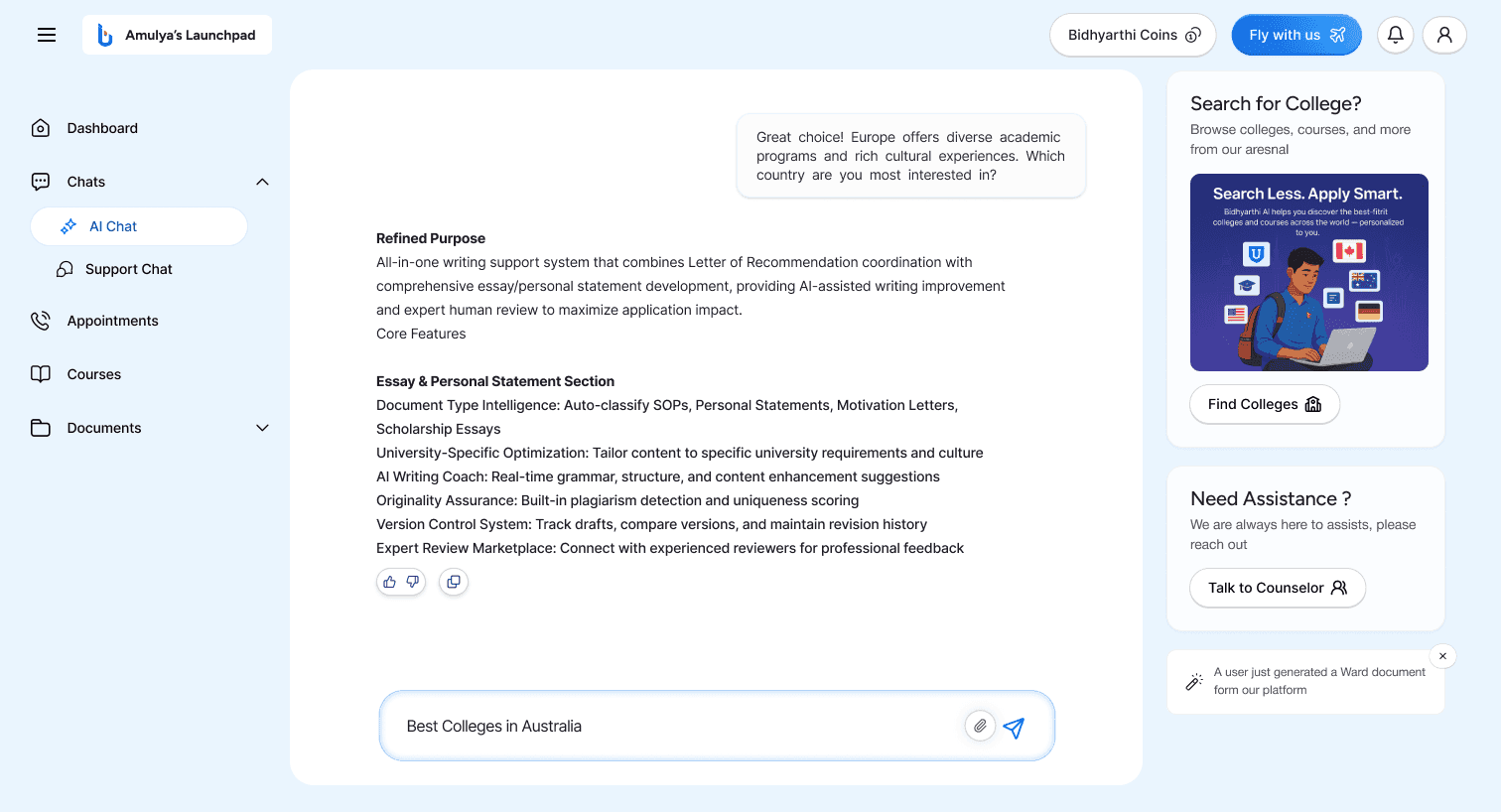
Calm surfaces for uncertain decisions.
Motion
The assistant needed to feel calm while it moved.
AI conversation
Chat with context
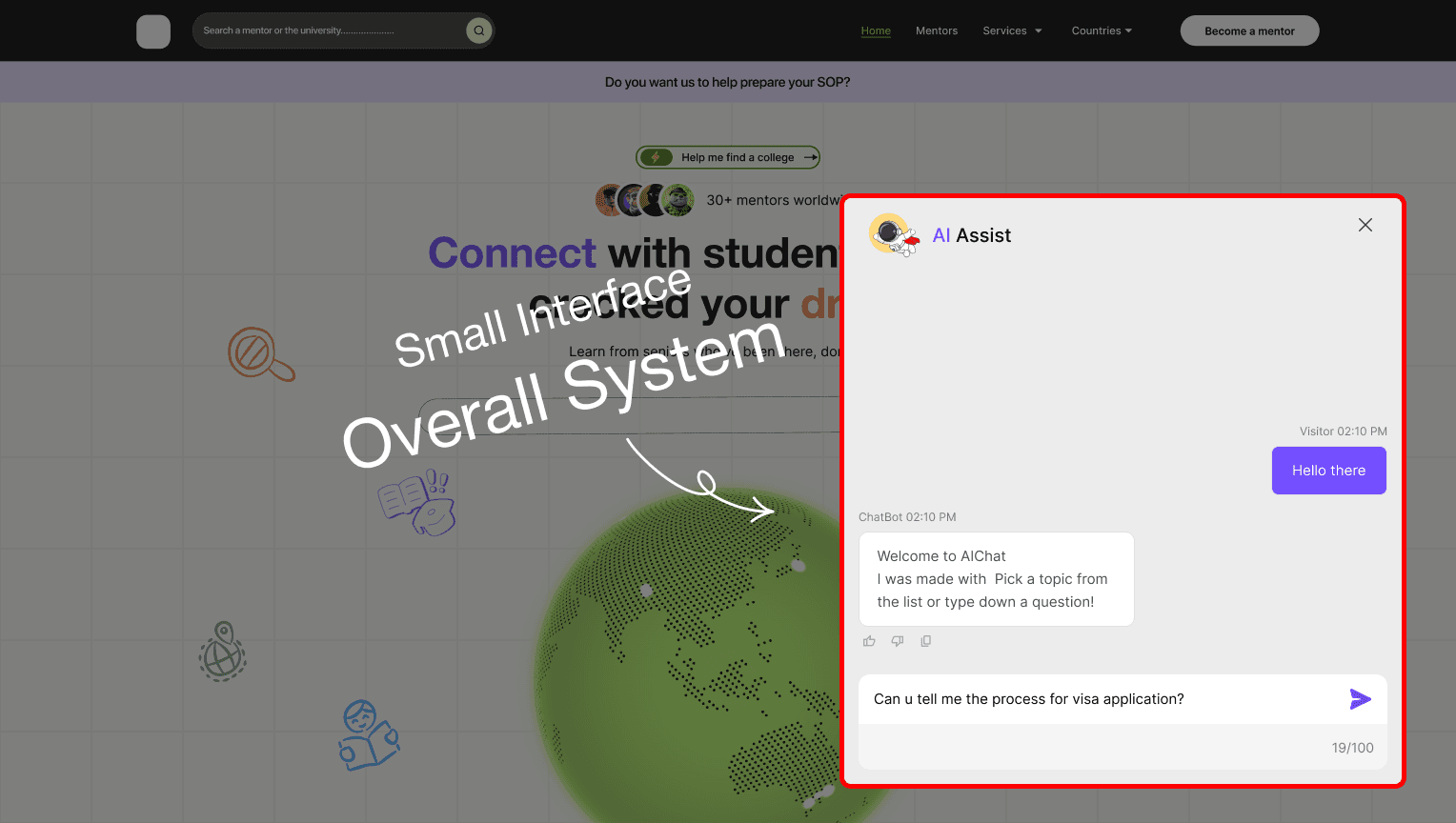
The chat motion keeps prompts, replies, and state changes calm so the AI layer feels like guidance instead of a support widget.
Search behavior
Finding direction
Search interactions were treated as decision support, not a plain input field. The motion keeps the next action visible without adding noise.
Process
From a hidden feature to a guided product behavior.
Research
Find the points where students stopped trusting the product.
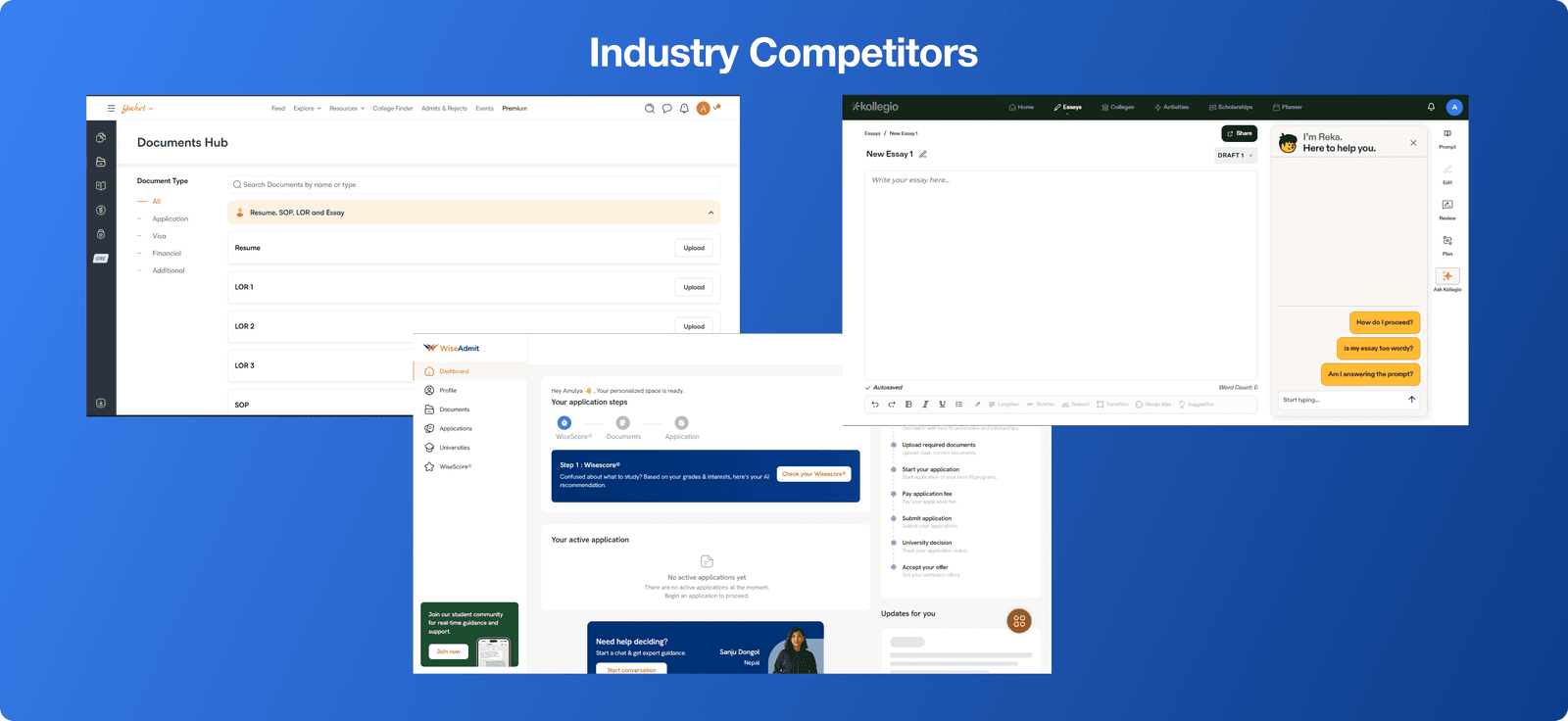
Competitor reviews, applicant conversations, and product mapping showed that students needed visible structure before they were ready to trust an AI response.
Architecture
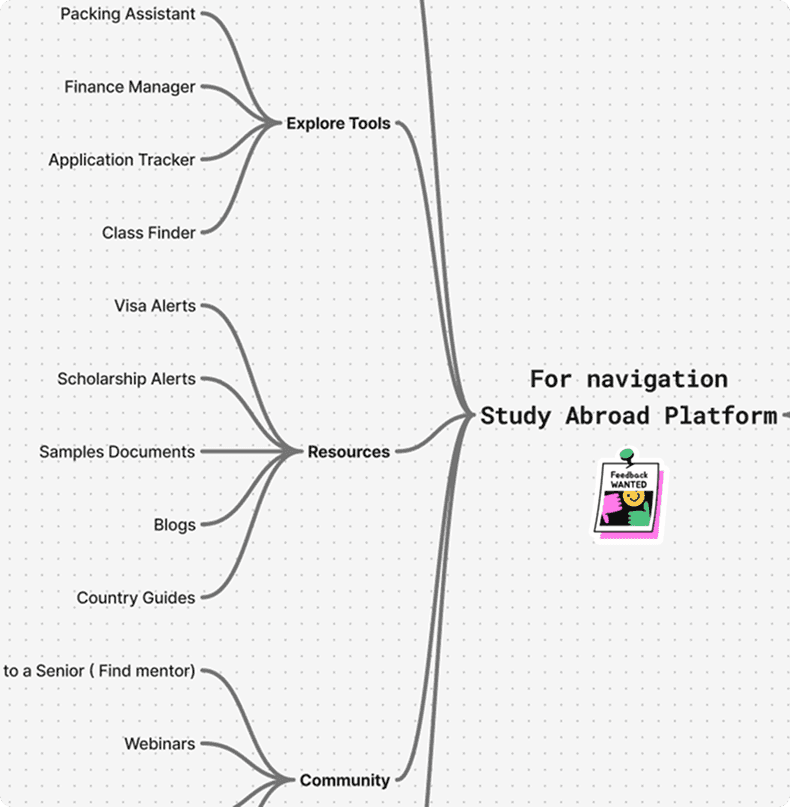
Make the next useful action obvious.
The sitemap and prompt strategy were rebuilt around common study-abroad decisions: destination, eligibility, institution fit, cost, and application readiness.
Interface
Let the AI feel guided, not hidden.
The final direction uses calm surfaces, clear prompts, and progressive context so students always know what they can ask and what to do next.
Takeaways
The useful part of AI was the structure around it.
AI products still need visible structure before users can trust the invisible system.
Student-facing guidance works best when options are reduced into clear next actions.
Lead-generation goals and user confidence are not separate problems in education products.
A calmer interface made the product feel less like support chat and more like a study-abroad assistant.
Next case study